
Illustrative image
Medical Facials
Dermaplaning Facial
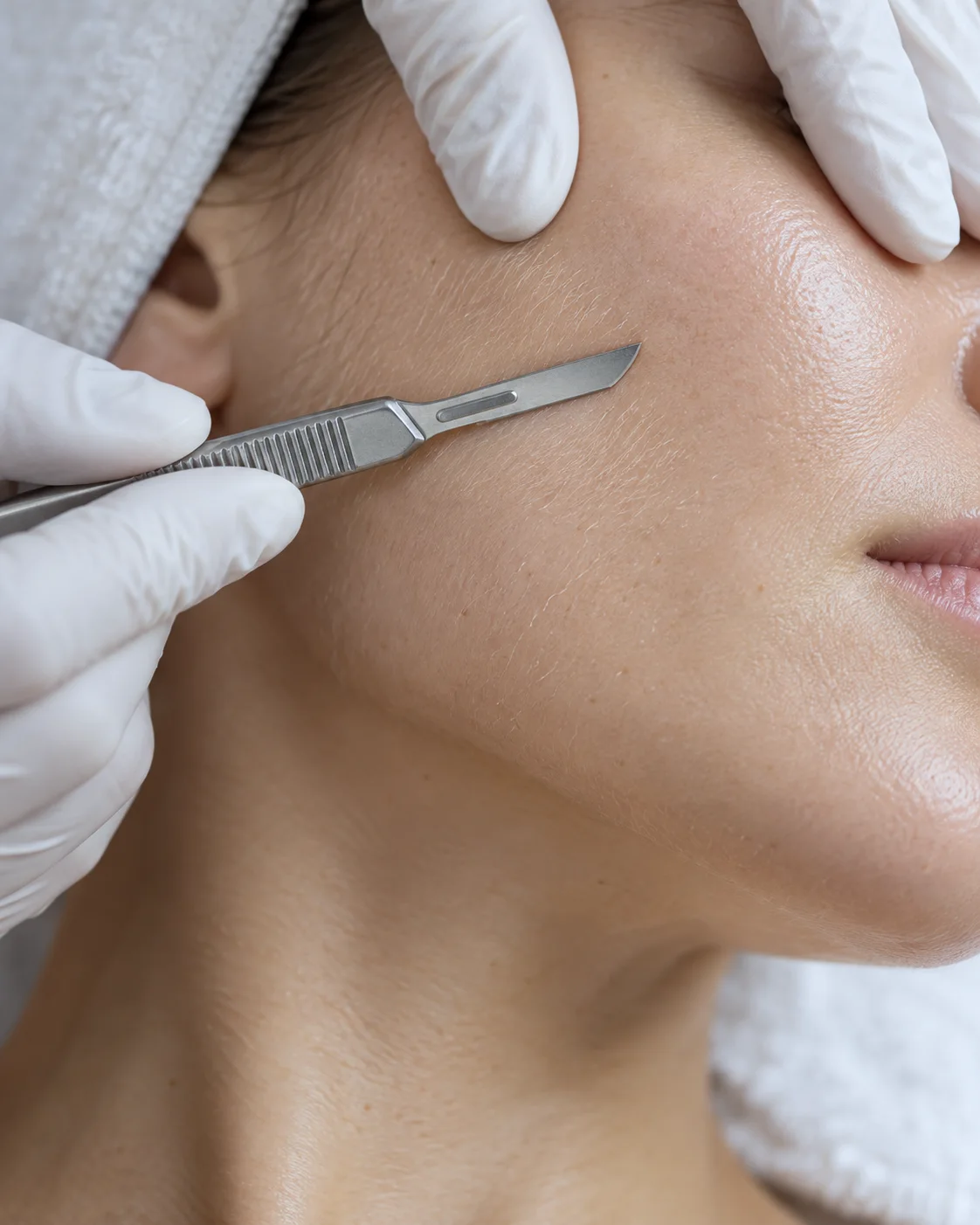
Dermaplaning uses a small, fine blade to gently remove dead skin cells and the soft facial hair known as peach fuzz, leaving skin feeling smoother. Your provider will talk with you first about whether it suits your skin.
- Category
- Medical Facials
How It Works
Understandingdermaplaning.
Dermaplaning is an exfoliating treatment: a provider passes a small, sterile blade lightly over the skin to remove dead skin cells and fine vellus hair from the surface.
Removing that surface layer can leave skin feeling softer and looking a little smoother and brighter. The effect is temporary — hair grows back, and skin continues to renew itself — so some people choose to repeat it over time.
Dermaplaning is one specific technique. A signature facial is a broader skincare appointment tailored to your skin, and a chemical peel uses a solution, rather than a blade, to remove outer layers of skin. Any facial steps offered alongside dermaplaning here are explained at your consultation.
Commonly discussed at consultation
- What you would like to change about how your skin looks or feels
- Any acne breakouts, eczema, cold sores or other active skin issues
- Sensitivity and the skincare products you use
- Recent treatments, and how your skin has responded to exfoliation before
Concerns & Suitability
What dermaplaning is used for.
People often ask about dermaplaning when they would like:
- Skin that looks dull to feel smoother and brighter
- Less visible peach fuzz on the face
- A gentle physical exfoliation
- A smoother surface before applying skincare or makeup
Suitability is individual
Dermaplaning lightly disrupts the skin barrier, so skin may feel irritated for a short time afterwards, and a nick can lead to infection. It is generally avoided during an acne breakout — where it can aggravate existing acne or contribute to more — or with eczema, cold sores, rashes or other active skin issues. Sensitive skin, the products you use and recent treatments all affect whether it suits you, so your provider assesses your skin first.
Your Appointment
What to expect.
-
Consultation and skin assessment
Your provider looks at your skin, asks about breakouts, sensitivity, skin conditions, the products you use and recent treatments, and explains whether dermaplaning is likely to suit you.
- Mention any active acne, eczema or cold sores
- Share retinoids or other active products you use
-
An agreed treatment plan
If dermaplaning is appropriate, your provider explains what the treatment involves, any other steps in your facial, the possible side effects and the cost before you begin.
- Ask how often treatment may be appropriate for your skin
-
Personalized aftercare guidance
Your provider explains how to care for your skin afterwards, including sun protection, and what to look out for.
- Wear sunscreen afterwards
- Report any cuts, signs of infection or persistent irritation
General information only. Your provider will give instructions specific to you.
Related Treatments
You may also explore
Take the Next Step
Talk throughdermaplaning.
Book a consultation to discuss your skin, what you would like to change, and whether a dermaplaning facial is right for you.